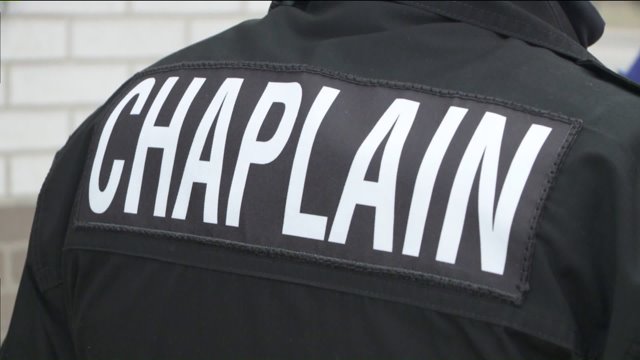
DHS’s CISA (Cybersecurity and Infrastructure Security Agency) has issued two documents, Mitigating Attacks on Houses of Worship Security Guide and a companion Fact Sheet. It’s been on my mind and heart to talk about the controversial (to some) subject of chaplains being armed. This is not to be confused with military chaplains who aren’t armed, first as tradition and later additionally as a component of the Geneva Convention. Chaplains serving in public service agencies, public safety, private corporations, prisons, hospitals, etc. are not armed either. I am strictly talking here about chaplains who are shepherds and servants to their church and community who many times are on their own, traveling long distances, work in rural areas, where they are often functioning in an augmented role and the necessity of a means of defense is apparent. We are not law enforcement officers, and it is wrong to take on any such role and certainly not in any pretense of official capacity. Analogously we are not fire-paramedics, but have emergency medical responder training. We are called on as Christian peace keepers and peace makers which is substantially different from law enforcement but may involve us in conflict that could be violent; further, we are accountable to the Lord, the church, and the community which should not put us at cross-purposes with other agencies, but in these times that is not a given. As many people in rural areas and reservations know, law enforcement and fire-rescue response can be a long time away, and isn’t always available 24 hours. This has been the reality in many counties in Oregon for many years as one of many examples.
The concept and function of security in an actual building and its grounds (House of Worship, or as the documents above cite them as ‘HoW’s’. Great, another acronym.) is a critical issue, one that must be studied and consulted on not only by the church members, but qualified persons who have experience and skills, ideally members themselves of the local church. This, to put a fine point on it, is not in my focus for the Signal Corps Ministry but should fit and overlap with great ease and efficacy. The difference being that chaplains are in the field, and our security parameters are entirely defined by this.
Primarily important to explore is the individual chaplain’s choice to be armed; it is not and should not be a requisite for service, and should be prayerfully approached. I realize that to many this is a controversial idea with many facets, and I cannot allay or resolve the controversy. In my experience rural communities have firearms as an inherent component of our lives. They are tools that feed us, that defend us, and provide a deep discipline and tradition that underpins our cultural cohesion, identity, and continuity. If you didn’t grow up in this world, it may seem incomprehensible. It’s my observation that ‘outsiders’ have a great deal of cognitive dissonance in seeing firearms in any other light than something that is evil. I cannot allay or resolve that issue either. But I ask the reader who may get stuck at this point in my article to allow intellectually that our sovereignty, self-determination, and existential perseverance as a native culture, as the local body of Christ, a church community, is in no small way empowered by this God-given right to defend ourselves. We have an obligation, all of us no matter of what tribe, to protect our family and community both spiritually and physically. This moral imperative alone is a requisite of being a chaplain, of being a Christian.
For the chaplain in the field, a firearm, and specifically a sidearm, is and should be a thoughtfully and prayerfully approached issue. You should struggle with the idea of having to use it in a worst case scenario. As a chaplain it should only be used in a worse case scenario, and if you don’t think you can competently do this, do not carry a weapon. If you start your personal preparation to carry by holding this hypothetical in your mind, heart, and prayers first, then you will know how you will proceed; indeed anyone who carries should start with this scenario in my opinion. It is a great responsibility and moral burden that you must explore honestly with yourself and others, have integrity that you can easily and not facetiously demonstrate in your being to yourself and others, and ultimately rely on your relationship with Christ to guide you. If you have any legal prohibition from firearms, you put yourself and others at danger if you carry illegally. I cannot endorse breaking the law, even as I have my own criticism of gun regulations, because as a public servant and first responder you negate your viability to your community if you are committing a felony. You, as a member of a social apparatus and structure, cannot violate the laws that allow you to act in the public interest; you would sabotage not only your ability to serve, but your relationship with the Lord and damage the agency that first employed you and its trust relationship with the church and community. If you are not edifying the church, the body of Christ, in all aspects of your service, then you must reevaluate and pray for guidance both from the Lord and His body.
In addition to maintaining our integrity and accountability to God and the local church, carrying a firearm requires training, for which we are also accountable. Wearing a collar doesn’t make you a holy person, buying a radio doesn’t make you a RTO, and carrying a gun doesn’t make you a qualified combat marksman. Just as you are divinely called, commissioned, train, qualify, and are accountable to the Lord, the body of Christ, and by the Holy Spirit to be a minister and for every other skill you posses and wield in service to the community, you must achieve a qualified degree of skill and competency with your sidearm. Unlike a radio comms or pastoral care, you don’t use your firearm daily (God willing) so you must make time for regular training. If you cannot train regularly with your sidearm, you shouldn’t carry it. There are myriad sources for training so I will not hash out one technique against another or argue isometrics versus weaver, Glock versus 1911; but pursue and stick with training as diligently as possible. Your skill, this burden, is meant to save a life, to stop wickedness. Just as chaplains have a calling and expectation to be God’s ministers to His children in the field as Christ and the Apostles have laid out for us, the presence of the ultimate authority and the ultimate peace, so must we be the ultimate warrior: one who knows how to keep a fight from happening yet will end it if it must be fought.
Yes, more is expected from you. You are to be the better person in all scenarios, not by your own pride and design, but by humble subservience and discipleship to Christ. No less, and God willing.
Additionally, we have an overwhelming duty to carry concealed (lawfully per your state’s statutes). As I am describing it, a sidearm is a pistol in a holster secured on your person, not visible to a person in close proximity, such as one would be when having a one-on-one conversation. So no obvious printing, no muzzle sticking out from the bottom of a shirt or jacket: deeply concealed and secured. This necessarily excludes long guns. We are to inspire and be the presence of Christian love and compassion; this tool we carry against the forces of the great adversary must be wielded discretely until truly needed. Our physical presence, as we practice and prayerfully seek Christ’s guidance and blessing, should unequivocally strive to bring calm to any situation that lacks it, if not through our direct intervention and de-escalation. Openly carrying a sidearm has a certain affect on observers that may be desired in certain situations. Unless you know, in what is a much rarer occasion, that this is the affect you need to have to bring effective de-escalation (I’ve been in a few situations like this but they are few, especially as a chaplain) always carrying in deep concealment is our default mode of carry.
Knowing your moral imperative to protect and serve the body of Christ will inform you if carrying a sidearm is appropriate. Obviously, I should think, a minister/chaplain who is counseling in a home, church, or office for example, wouldn’t wear their sidearm. There are many places where it would be wrong to be armed, but a definitive list would have so many exceptions for particular places and communities so it must be approached paradigmatically under the the definite parameters of a pastoral caregiver and first responder. Additionally, understanding not only the lawful concept of proper escalation of force, but the Christian imperative to love one another, including our enemies, places a chaplain in the field under even more burdens and responsibility. See how this sharpens the personal, moral, Christian question to carry? It approaches a deep paradox as a Christian, and especially so as a minister/chaplain who is called to serve and edify the church. This then heightens our need to be leading a prayerful life, constantly seeking the Lord in all that we do, and being accountable to God and the body of Christ. Theologically this important paradox is pressed on us when we are told not to repay evil with evil (see Romans 12:9-21) and we must “Defend the poor and fatherless; Do justice to the afflicted and needy. Deliver the poor and needy; Free them from the hand of the wicked.” (Psalms 82:3-4). In that we reap what we sow, so must we sow peace, forgiveness, compassion, hope, faith, love. In that we are disciples of Christ who have died to our body of sin when we are saved, our grace is costly as we are asked to give our life for our Lord. So even as I write this I embrace the tension, paradox, and heightened responsibility in the manifestation of the armed chaplain; and know all too well the wickedness that threatens the community that we have been called to serve. This isn’t just a paradox of service in Christ but of life in the fallen world. And God has spoken to us, just of this:
“So then, my beloved brethren, let every man be swift to hear, slow to speak, slow to wrath; for the wrath of man does not produce the righteousness of God. Therefore lay aside all filthiness and overflow of wickedness, and receive with meekness the implanted word, which is able to save your souls. But be doers of the word, and not hearers only, deceiving yourselves. For if anyone is a hearer of the word and not a doer, he is like a man observing his natural face in a mirror; for he observes himself, goes away, and immediately forgets what kind of man he was. But he who looks into the perfect law of liberty and continues in it, and is not a forgetful hearer but a doer of the work, this one will be blessed in what he does. If anyone among you thinks he is religious, and does not bridle his tongue but deceives his own heart, this one’s religion is useless. Pure and undefiled religion before God and the Father is this: to visit orphans and widows in their trouble, and to keep oneself unspotted from the world.”
James 1:19-27 NKJV
 Sons Of Thunder Signal Corps Ministry
One thought on “Community Security and the Chaplain”